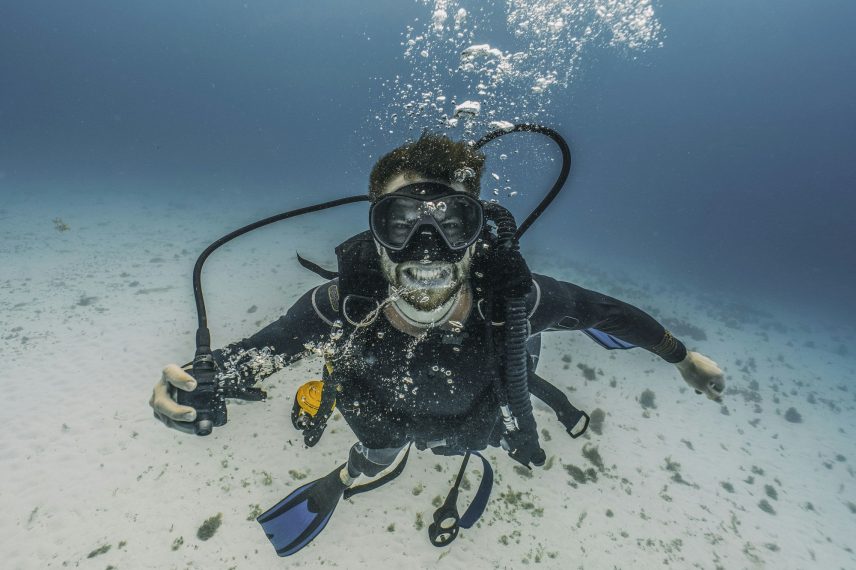
If you know someone with an adventurous side who’s never experienced scuba diving before, now might be an ideal time to pique their curiosity about this thrilling activity. Come prepared with some quick facts so they may become your dive partner!
Jacques-Yves Cousteau – the Frenchman responsible for popularizing self-contained underwater breathing apparatus (SCUBA) during World War II. Additionally, Cousteau developed the demand valve system that modern regulators utilize to ensure air delivery at an even rate under water.
Oxygen, essential to life on Earth, accounts for 21% of its atmosphere and can be found in the air that scuba divers breathe. Oxygen toxicity while diving may occur when oxygen levels and pressures become too high; symptoms include seizure.
Dry suits – an insulated garment worn to protect the body from exposure to cold, moist seawater – are worn by divers as an extra measure against exposure and to prevent abrasions in cold seawater conditions. Additionally, some divers also choose them for warmth and comfort reasons.
Mask – an optical device used by divers, freedivers and snorkellers to see underwater. Divers must fit and adjust their masks so they are properly sealed over their eyes and nose for comfort and safety.
Nitrogen gas infiltrates tissues and blood at depth, when divers remain submerged for an extended period. Nitrogen can only be removed from a diver’s system during decompression dives or safety stops on ascent.
Divers must monitor their residual nitrogen concentration to avoid narcosis, or nitrogen toxicity, which causes impaired judgment and lack of control under water. Diving in environments rich with nitrogen such as coral reefs or shipwrecks reduces this risk significantly.
Scuba gear enables divers to safely explore aquatic environments. This equipment includes a buoyancy compensator (BCD), which balances body weight underwater so as to allow safe navigation underwater without floundering or losing control. A tank and mouthpiece also need to be present; both connect directly with first stage regulators.
Diving Log – This log keeps track of each dive’s date, time and depth to assist divers in calculating residual inert gases and planning future dives. To be safe, divers should keep one on file after every dive for reference purposes. It is considered best practice to complete such logs regularly.
A buoyancy compensator (BCD), is a vest-like device worn by scuba divers that serves to lift them up out of the water, helping to control depth. It is an integral piece of safety equipment. Fins of a diver resemble propellers to push them forward through the water by creating suction forces on either side, similar to what a propeller does; in addition, using hands alone allows a diver to navigate along ocean bottom with greater ease than with fins alone.